

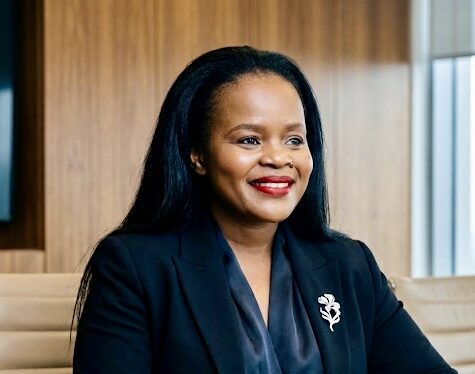
Meet Matlhogonolo Ledwaba, a food educator and social entrepreneur born in Botswana and raised in South Africa, who is using the simple act of cooking to open new possibilities for children and communities. Through the Plant to Plate Project, an initiative of the Bread Box Bakery & Studio, she is building a bridge between food, learning, and livelihoods so that the next generation not only eats better but also understands where their food comes from and how it can shape their future.
Matlhogonolo’s journey took shape as her curiosity about business, creativity and community development deepened. She completed a National Diploma in Internal Auditing at Tshwane University of Technology (TUT), followed by a Bachelor of Business Administration and an Honours degree through MANCOSA. She later invested in her own growth through specialised entrepreneurship and leadership qualifications at the Gordon Institute of Business Science (GIBS), including the Road to Growth, Road to Finance and Road to Leadership programmes. These experiences equipped her with both the technical and human-centred skills needed to design practical initiatives that are financially viable and deeply grounded in community realities.
The idea behind Plant to Plate is deceptively simple but inspired. Children and community members are invited into a learning space where they cook, bake, and experiment with food, while also being introduced to the basics of nutrition, budgeting, and food production. In children’s classes, measuring flour becomes a lesson in maths, reading recipes builds literacy, and teamwork in the kitchen becomes a way of practising collaboration and confidence. For Matlhogonolo, these are more than just fun activities. They are building blocks for independence and opportunity.
Over time, the project has extended beyond the kitchen. Recognising that many families struggle with both food insecurity and limited access to fresh produce, Matlhogonolo began integrating gardening and, more recently, hydroponic systems into the programme. Participants learn how to grow herbs and vegetables in small or unconventional spaces, using water-efficient methods that are particularly valuable in urban and resource-constrained environments. This soil-free approach can feel unfamiliar at first, but practical demonstrations and small pilots help communities see what is possible when innovation meets local need.
Through this blend of education, gardening and hydroponics, Plant to Plate contributes directly to several Sustainable Development Goals. Its core focus is SDG 2 on Zero Hunger, as it supports households to improve their own food security and dietary diversity. At the same time, it advances SDG 3 on Good Health and Well-being by encouraging healthier eating habits and better nutrition, SDG 4 on Quality Education through hands-on, skills-based learning, SDG 8 on Decent Work and Economic Growth by opening pathways for small food enterprises, and SDG 12 on Responsible Consumption and Production through an emphasis on sustainable, locally anchored food practices.
Community recognition for initiatives like Plant to Plate has helped position The Bread Box Bakery & Studio as a valued hub for both high-quality baked goods and community learning. In 2025, The Bread Box was recognised as Gauteng’s Best Bakery in 702’s Gauteng’s Greatest awards, a reflection of the quality, consistency, and care that underpin the bakery and its community work.
The road has not been without challenges. Introducing hydroponics in communities where it is a completely new concept requires patience, trust-building, and a clear demonstration of its benefits. Raising awareness, securing resources, and sustaining participation all demand persistence. Matlhogonolo has responded by working closely with schools, parents, and local partners, starting small and allowing visible results to speak for themselves. Resource constraints have been met with creativity, using locally available materials and designing models that can grow as capacity and funding expand.
What keeps her going are the changes she sees in the people who come through the programme. Children gain practical skills and a sense of pride when they prepare a dish or harvest something they have grown themselves. Parents and caregivers start to view food as an entry point into learning, entrepreneurship, and better health. Communities begin to imagine new ways to feed themselves that are affordable and sustainable.
Outside of her work, Matlhogonolo keeps learning, reading widely and trying new recipes and ideas that link food with creativity and innovation. She values time with her family and draws energy from mentoring others on their educational or entrepreneurial paths.
LinkedIn: Matlhogonolo Ledwaba
Email: goalkeepers@sun.ac.za
* This article was drafted using human expertise supported by AI-assisted writing tools.